1. The prescription leaves room for interpretation
An instruction may identify a product but omit information the lab needs before starting. The result is an avoidable clarification loop. Agree a submission checklist by case type, and make required information visible to the clinic before the order is sent.
Do not fill an important gap by guessing. Assign someone to request clarification and record the agreed answer with the case. The clinical or technical content of that checklist belongs to qualified professionals and the lab's approved procedures, rather than a software vendor's generic form.
2. The answer is in the wrong conversation
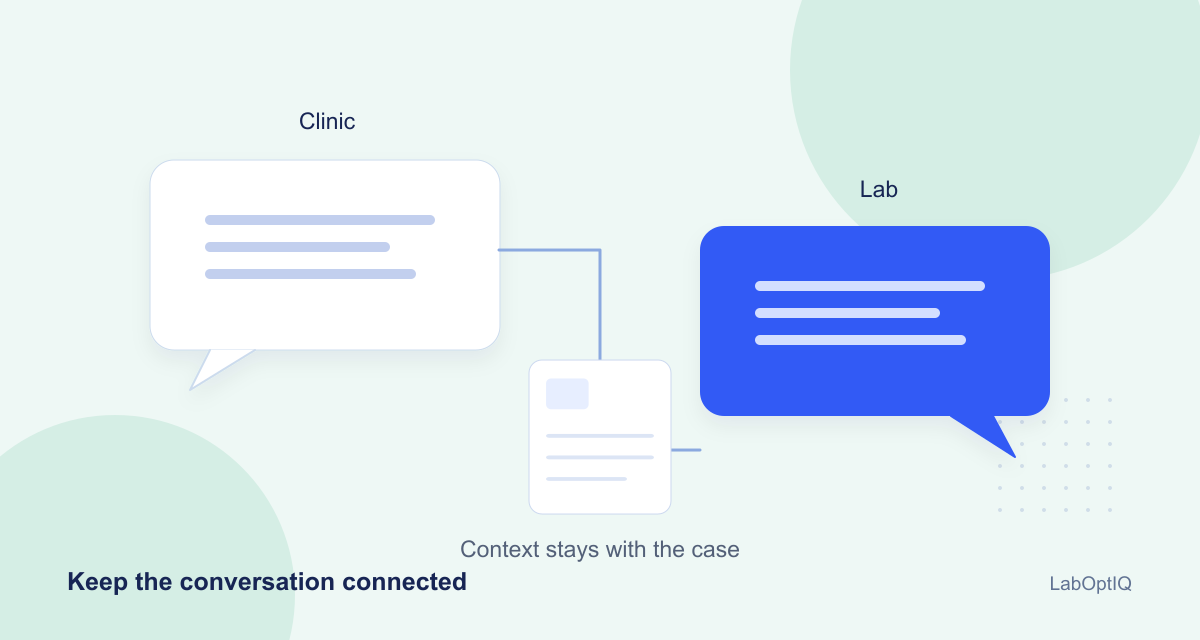
The original request is in email, a photograph arrives in a message, and the approval is given by phone. Each channel may be useful, but the next person needs a consolidated account of what was agreed. Use a stable case reference in every handoff.
Record consequential verbal decisions in the case history with the date and the people involved. Distinguish an internal note from a message intended for the clinic. A central conversation is useful only if its audience and relationship to the order are clear.
3. New instructions replace the old ones silently
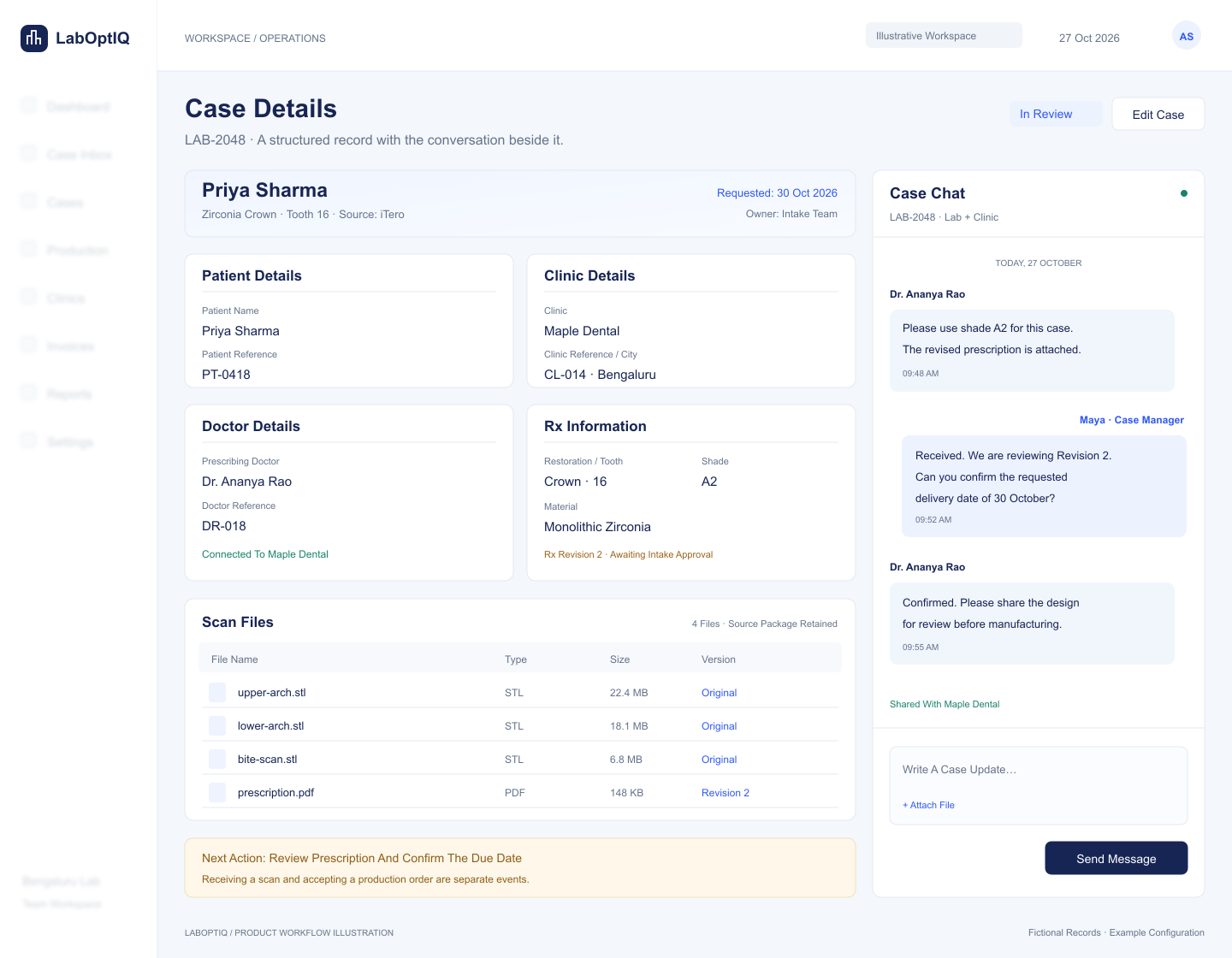
A changed attachment can look like a duplicate until someone notices that its content differs. Keep versions identifiable, with the author, time, and reason for a revision. Make it clear which version is approved for the next step.
A revised prescription may affect work already completed. Ask the responsible person to acknowledge the change and assess its impact on timing and commercial terms. Uploading a file should not by itself imply agreement that a change can be absorbed without consequence.
4. A question has no owner
A message is sent to a shared address, and everyone assumes another person is responding. Assign an owner and a next check time for unresolved questions. Use a visible Awaiting Clinic response or equivalent status instead of leaving the issue in an individual's unread messages.
5. Different dates mean different promises
A requested clinical appointment, desired delivery date, promised dispatch, and internal stage target are different values. Label them accordingly. When one changes, explain which other commitments were revised and who communicated the change to the clinic.
A more visible date is not always a confirmed date. Clinics should be able to tell whether the lab has accepted their requested timing. This prevents a submitted request from becoming an assumed commitment simply because both appear in the same date field.
6. A status update has no useful context
In Production is a broad label. The clinic may need to know whether work is progressing normally, awaiting clarification, or expected to leave on a revised date. Agree what progress information should be shared and what remains an internal production detail.
Avoid exposing speculative completion estimates as promises. A good update states the current agreed position, the next relevant event, and the person to contact if action is required. Repeated status calls can indicate missing visibility, not an unreasonable customer.
7. The communication history disappears at handover
When a case manager is absent, their colleague should not have to search a personal account. Keep shared access limited to appropriate users and connected to the case. Establish a handover routine for unresolved questions and impending dates.
Start improvement with one clinic and a few recurring case types. Agree submission information, response ownership, and how changes are acknowledged. Then evaluate whether a portal or integrated case conversation helps maintain those agreements. Technology cannot replace a communication policy that neither side has defined.
Explore this workflow with your team.
Bring your cases, scanner sources, and existing tools to a LabOptIQ demo. Confirm the handoffs, available features, and integration scope that matter to your lab.
Book A Workflow Demo